
A Silk Noose Around Serbia’s European Integration on China’s Silk Road
Vučić’s Sinoization of Serbia
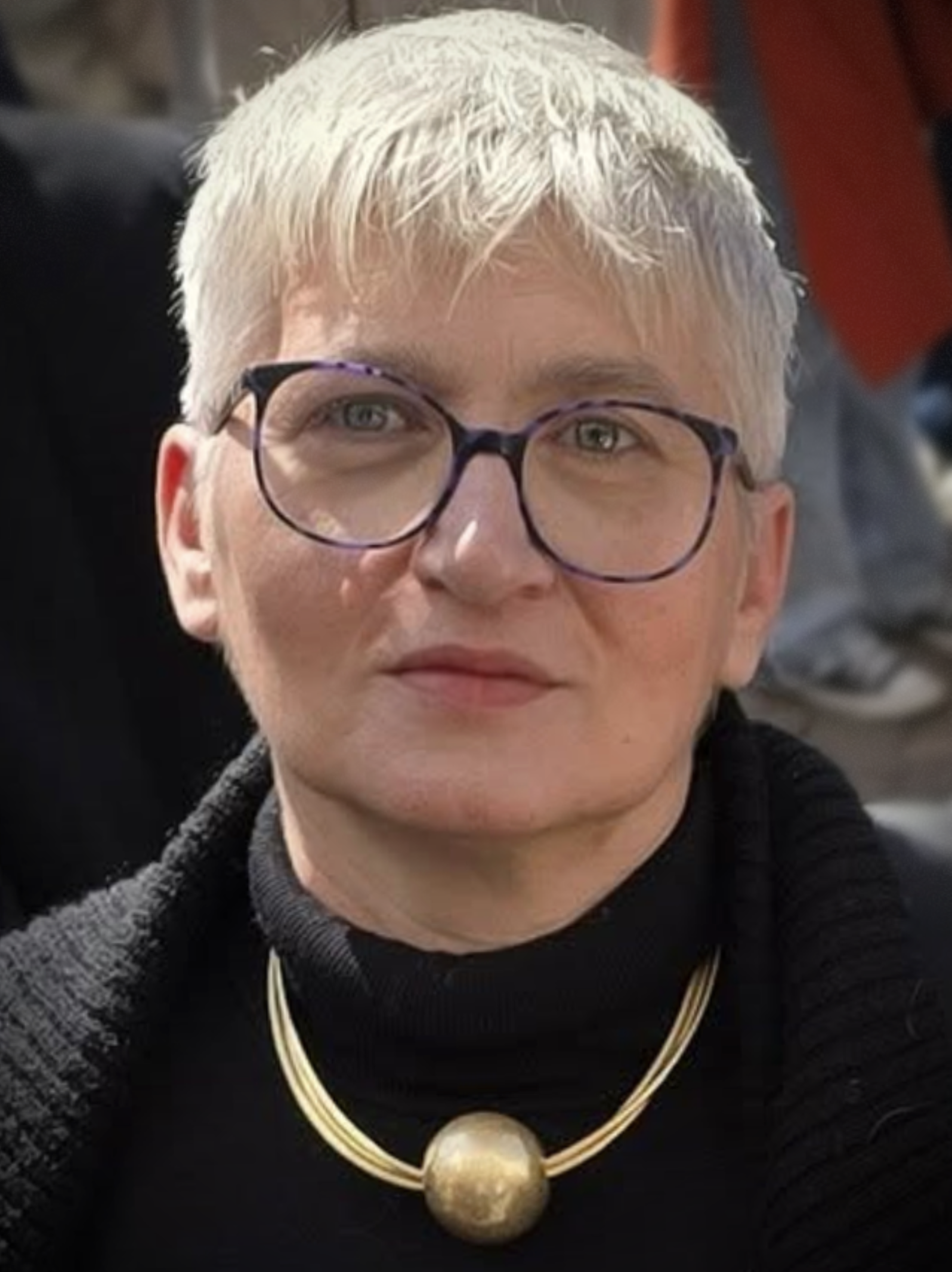
Vesna Almog, Vice President of Solidarity
Vučić’s visit to Beijing was not merely another episode in the policy of “sitting on four chairs.” Pro-regime Chinese sources presented it as confirmation that Serbia is no longer only China’s economic partner, but also a political, security, and ideological pillar of Chinese presence in Europe. In that sense, the term “sinoization of Serbia” does not refer to Chinese cultural influence on Serbia, but to the gradual adoption of the Chinese model of governance alongside the strengthening of interstate partnership to the level of semi-colonial dependence.
Chinese state media set the framework very clearly. Xinhua states that Serbia is the “first European country” building a “community with a shared future for a new era” with China and that it is an important Chinese partner in Southeast Europe. China Central Television adds that the two countries mutually support each other regarding “core interests and major concerns” and have built strong political trust. This is not neutral diplomatic language; it is Chinese code for strategic alignment. In the Chinese narrative, Serbia is no longer portrayed as an EU candidate temporarily cooperating with China, but as a geographically European state that has embraced a distinct Chinese political framework.
The most important document of the visit confirms that this relationship goes far beyond economics. In the joint statement from May 2026, China and Serbia state that building a “community with a shared future” is a common strategic choice based on sovereignist policies and the “will of the people.” Quasi-sovereignist in Serbia’s case. Serbia commits itself to supporting Chinese positions on Taiwan, Hong Kong, Tibet, Xinjiang, and human rights, while China reciprocates with support for Serbia regarding Kosovo. This is an exchange of political loyalty: Belgrade receives a Chinese veto shield over Kosovo, while Beijing gains a state on European soil legitimizing China’s view of its geostrategic interests, human rights, and the international order.
This is where the problem with European integration begins. Serbia’s EU path requires alignment with European foreign, security, legal, and value-based policies. The Chinese framework implies the opposite: a sovereignist shield for authoritarian practices, rejection of the “politicization” of human rights, and cooperation with a party-state without democratic conditions.
In another joint statement, Serbia supports the four global initiatives of Xi Jinping — development, security, civilization, and governance — and explicitly accepts formulations stating that human rights must not be “politicized” and that states should not impose their values and systems on others. This directly contradicts the principles of EU enlargement, which is based on fulfilling conditions related to the rule of law, human rights, free media, independent judiciary, and democratic institutions.
The military sector is the most visible aspect of sinoization. Serbia is not merely a buyer of Chinese equipment; Chinese sources portray it as a military-security partner. The Chinese and Serbian militaries have already conducted their first joint special forces exercise, “Peace Guardian-2025,” in Hebei, officially justified as strengthening combat capabilities and deepening practical cooperation between the two armies. This represents a qualitative leap: from equipment procurement to joint training, interoperability, and security trust.
Chinese commentators close to Xi interpret this even more openly. In pro-regime and nationalist Chinese media, Serbian military cooperation with China is portrayed as a response to NATO, Kosovo, and alleged Western “color revolutions.” A text in Sohu on Chinese-Serbian cooperation explicitly states that Serbia equipped a missile brigade of the Serbian Armed Forces with Chinese FK-3 and HQ-17AE systems, that the joint special forces exercise marked a “new peak” in military cooperation, and that Serbia is under dual security pressure allegedly imposed by the United States and the EU. The text is not an official document, but it is politically significant because it reveals how Chinese nationalist discourse interprets Serbia: not as a future EU member, but as a European point of resistance against the West.
The security sector may be even more problematic than the military one. It envisages deepening cooperation in combating terrorism (a term authoritarian regimes interpret very creatively), preventing “color revolutions,” protecting Belt and Road projects, securing major events, fighting transnational crime, conducting joint police patrols, and training special police units. The phrase “preventing color revolutions” is particularly alarming. In the Chinese-Russian political lexicon, it does not mean neutral protection of constitutional order, but rather a framework for delegitimizing protests, civic resistance, opposition organizing, and external election monitoring. When such terminology enters the security agenda of a country aspiring to join the EU, it is not technical cooperation with a third party — it is an ideological transplantation of authoritarian security language.
The political sector constitutes the third pillar of sinoization. In its statements, China does not ask Serbia merely for projects, but for an “exchange of experiences in state governance,” strengthening cooperation between parliaments, diplomatic apparatuses, and ruling political parties. This means the relationship is not being built solely between two states, but through synchronization between two models of power: the Chinese party-state and the Serbian personalized regime. Xinhua reports that Xi said China supports Serbia in pursuing a development path suited to its own national conditions and is ready to strengthen exchanges in governance experience. In the Serbian context, where institutions have already been devastated, such an “exchange of experiences” means the suffocation of multiparty democracy and democratic governance.
The technological sector completes the picture. China and Serbia emphasize cooperation in artificial intelligence, the digital economy, advanced manufacturing, space technology, digital education, e-commerce, telecommunications, and media. These are not benign economic sectors. In a modern state, AI, telecommunications, digital databases, surveillance, media, and security technologies form the nerve center of political control. When an authoritarian government develops such infrastructure with China, without European guarantees of transparency, data protection, and public oversight, the risk is not only geopolitical, but domestic: the state acquires digital tools for managing society without the democratic safeguards embedded in European systems.
This was not an ordinary visit, but the transplantation of an anti-democratic dystopia. Chinese documents and media describe the cooperation as a comprehensive political-security pact in which Kosovo, Taiwan, human rights, police, special forces, AI, media, political parties, infrastructure, and joint resistance to “hegemonism” are all interconnected. This is a parallel system binding Serbia not to the European normative architecture, but to the Chinese authoritarian project of a state without sovereign citizens.
Formally, Serbia has not yet abandoned the European path. The Chinese joint statement even notes that China “understands” Serbia’s aspiration to join the EU. But that sentence is merely an empty diplomatic ornament. The essence is that Serbia simultaneously commits itself to Chinese global initiatives, Chinese interpretations of human rights, Chinese “core interests,” the Chinese security agenda, and the Chinese model of political stability. EU officials are therefore increasingly openly stating that Serbia must make a strategic choice. Kaja Kallas stated in Belgrade that the European path requires real reforms, media freedom, anti-corruption efforts, and electoral reform — all things the Chinese model rejects.
The shortest diagnosis is this: Vučić’s China is not merely an investor and creditor; it is a vision of Serbia’s anti-European transformation. European integration requires changing the governing model: institutions instead of a leader, laws instead of deals, public procurement instead of political arrangements, free media instead of regime propaganda, accountability instead of “stability.” The Chinese framework offers the opposite: conditional, non-transparent, and uncontrolled investments, political support for dictatorship through security cooperation and international protection — everything except human rights and democracy.
That is why the “sinoization” of Serbia is not about Chinese language, culture, or trade. It is a process in which Serbia, under the more than willing leadership of Aleksandar Vučić, accepts the Chinese definition of stability: the state above society, sovereignty above rights, security above freedom, development above democracy, and geopolitical loyalty above European standards. Such a Serbia may formally remain an EU candidate for years. But substantively, it is drifting away from the EU precisely in the areas where membership matters most: the military, security, institutions, media, technology, and the political model of governance.
Anti-politics at a moment when Serbia stands at a major geostrategic crossroads is a recipe for materially tolerable servitude in the near future.
Sources:


Comments